

Post-costing / Pre-costing
The Pre-costing & Post-costing module covers both the estimation of costs before production (pre-costing) and the determination of the actual cost after completion (post-costing). Post-costing is performed in stages, starting from the production accounting journal — checked beforehand against the trial balance — and allocating expenses to orders down to the full cost.
What you can do
Section titled “What you can do”- Pre-costing (planned cost) — based on the product structure (BOM) and technological sheets, with raw-material prices from a predefined nomenclature; used in quoting.
- Post-costing (actual cost) — the full cost per order/product, allocating the direct and indirect expenses from the production accounting journal.
- Consistency checks — production journal = trial balance (before), and full cost = journal − non-incorporable/under-activity expenses (after).
- Work in progress and price differences — determined with one click and posted to financial accounting.
- Profit per sold item — full cost compared with the sale price.
The post-costing stages
Section titled “The post-costing stages”1. Starting check. Before running post-costing, you verify that the production accounting journal equals the expenses in the trial balance. If the amounts match, you proceed to processing. (See Production accounting.)
✓ Production accounting journal = trial-balance expenses → post-costing can be processed.
2. Grouping expenses by type. The expenses in the production journal are grouped by type: direct, indirect, non-incorporable and under-activity. For direct expenses, every line in the journal must carry the production order code (or, when working with the UIC code, that code). This guarantees that all direct expenses go onto orders, and the amounts in post-costing and in the journal are equal.
3. Direct labor. It is determined and recorded in the production accounting journal as a direct expense, with a reversal (storno) on indirect expenses (if all payroll costs were recorded as indirect).
4. Section overheads (CGS). They are determined and allocated relative to labor; post-costing is reprocessed to determine the section cost.
5. Administration overheads (CGA). Depending on the product type (semi-finished or for sale) they are applied or not. As a general rule, CGA applies only to products that are sold. The CGA percentages are then determined.
6. Final check. At the last post-costing run, the journal total minus the non-incorporable and under-activity expenses must equal the monthly full cost. This guarantees those expenses were allocated to orders.
✓ Journal − (non-incorporable + under-activity) = monthly full cost → allocation to orders is correct.
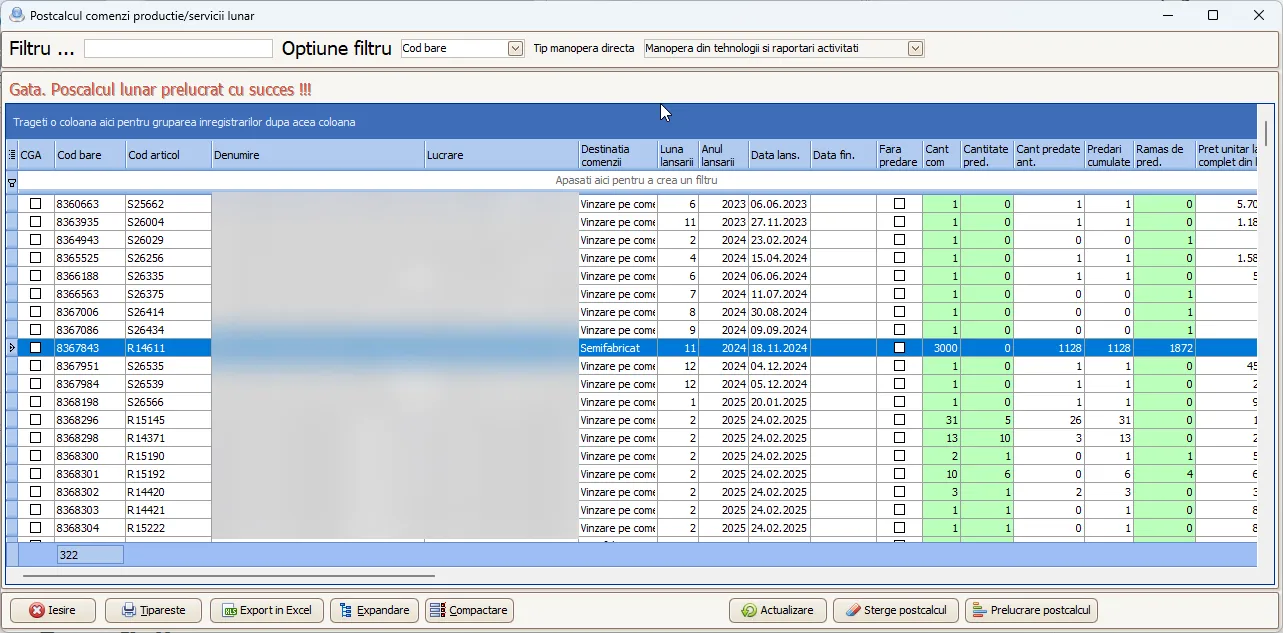
7. Cumulative post-costing. For products with a longer execution process, cumulative post-costing is run — i.e. the monthly expenses are accumulated for these products.
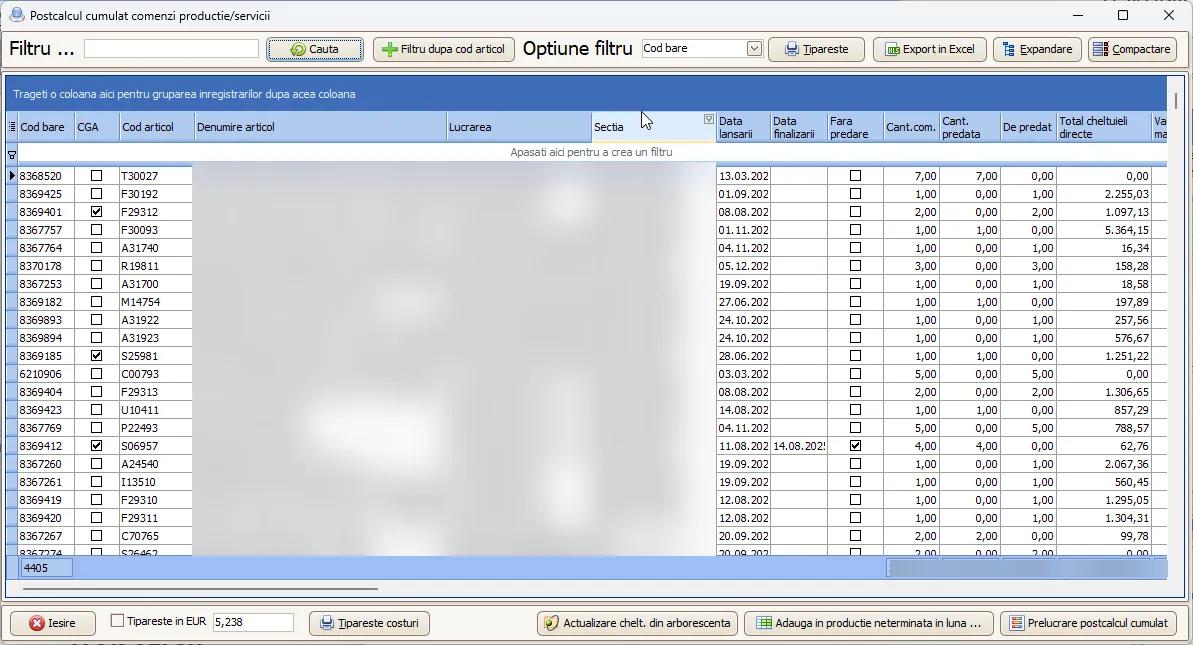
8. Work in progress and price differences. After the cumulative post-costing run, one click determines the work in progress and the price differences (favorable or unfavorable), which are posted to financial accounting.
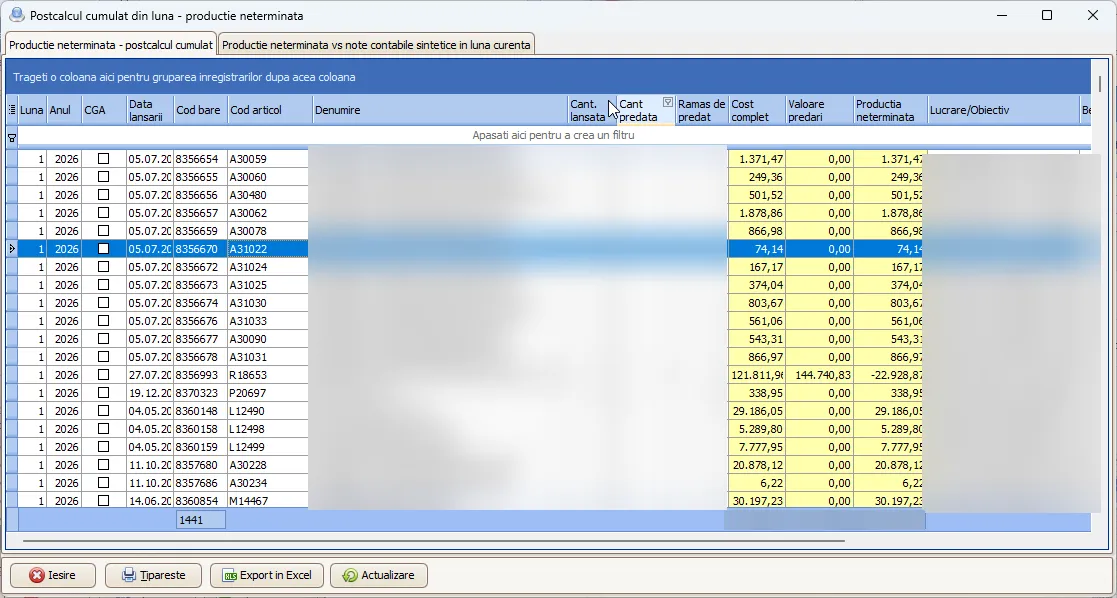
9. Profit per sold item. The full cost is compared with the sale price and the profit per sold item is determined.
Pre-costing
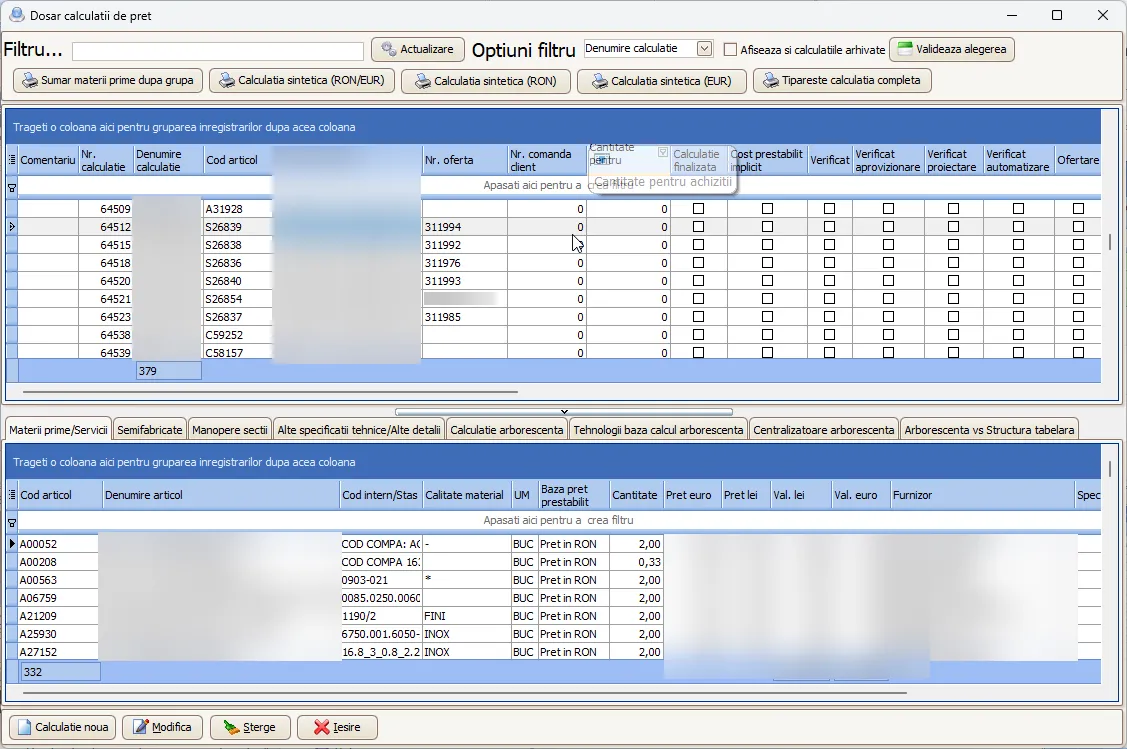
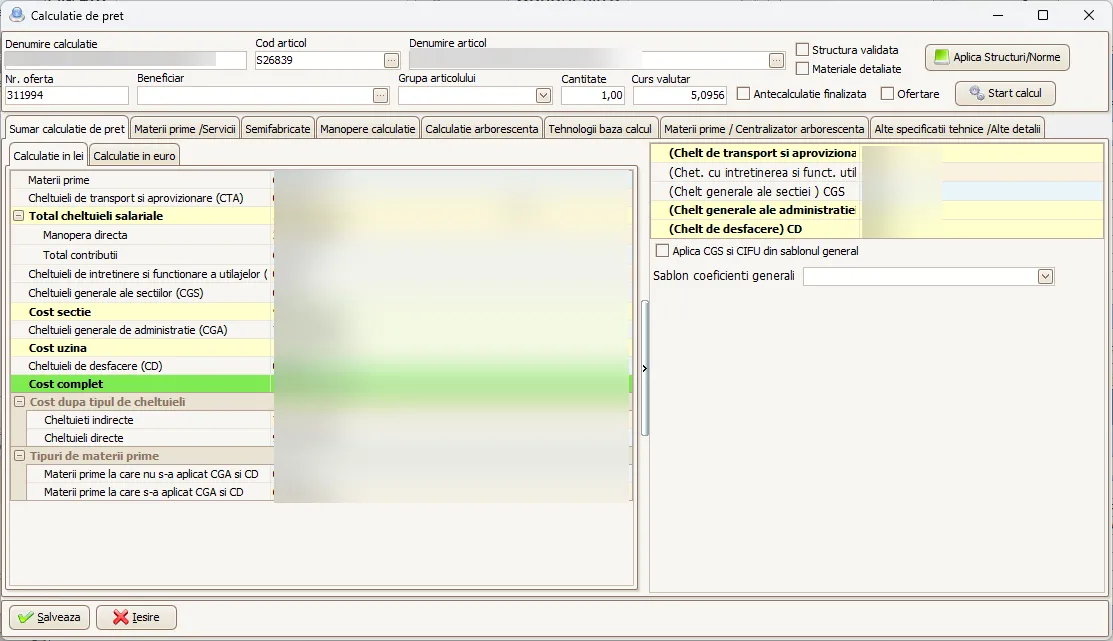
Section titled “Pre-costing”In pre-costing, raw-material prices are taken from a nomenclature of predefined prices. The calculation can be done from the BOM, as a multilevel pre-costing — i.e. the cost is determined for each element in the tree, from the lowest level up to level zero. Pre-costing is used in quoting, with recalculation of price and margin.
Benefits
Section titled “Benefits”- Post-costing correct “by construction”, reconciled with the trial balance and the production journal.
- Full cost entirely allocated to orders, with work in progress and price differences in accounting.
- Profitability per sold item.
- Fast pre-costing from the BOM, for quoting.
See the video tutorials or contact us for help.